Water Quality & Safety
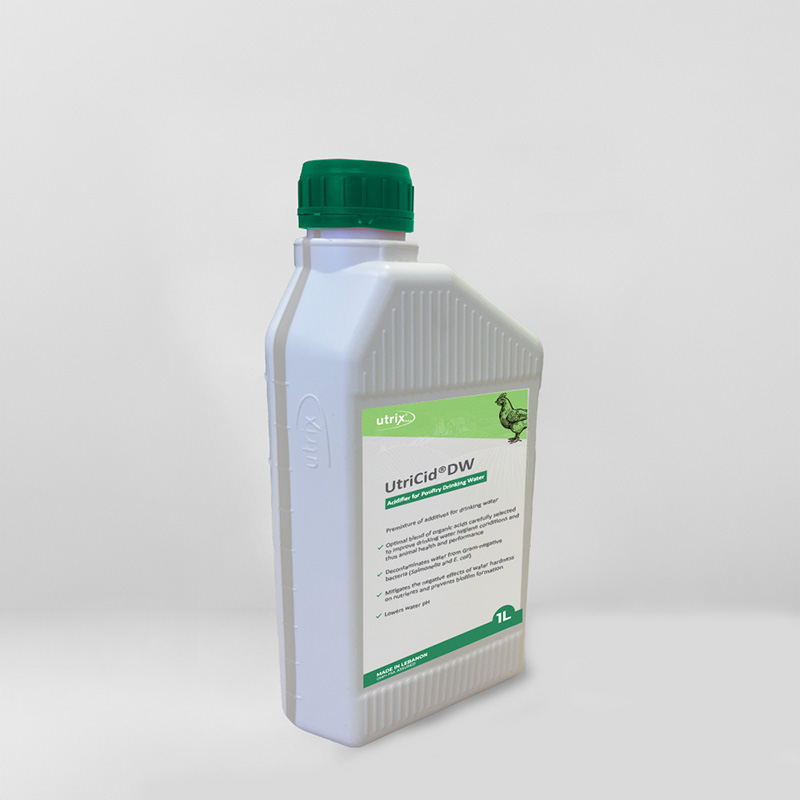
UtriCid®DW
Clean water, better poultry performance
Water quality is often overlooked in farm management. Nevertheless, water quality is just as important as feed quality in maintaining animal health and performance. Poor water quality, often due to contamination by harmful bacteria, algae, or high mineral content, can reduce water intake and lead to dehydration, negatively impacting growth and overall productivity. Contaminated water can even introduce pathogens that compromise animal health, resulting in higher disease susceptibility, reduced performance, and potential food product contamination. To ensure water hygiene, acidifiers are commonly used in drinking water systems. Acidifiers work by lowering the water pH, creating an environment that inhibits the growth of pathogens. By maintaining clean water free of contaminants, acidifiers help promote better hydration, improve gut health, and support optimal animal performance and farm revenue.
The Challenge
How does UTRIX improve drinking water quality and hygiene?

Key Benefits
What UtriCid®DW Delivers
Common Questions
Frequently Asked Questions
Water is the most consumed nutrient, directly affecting feed intake, digestion, health, and overall performance. Poor water quality immediately impacts productivity and flock wellbeing.
Disinfectants provide short-term cleaning, while UtriCid®DW offers continuous protection, preventing recontamination and maintaining water hygiene over time.
UtriCid®DW should be used when water quality is compromised by high microbial contamination, biofilm presence, or alkaline water conditions. It is also recommended during warm periods when microbial growth is higher, or when performance declines due to suspected water hygiene issues.
Water contamination reduces water and feed intake and introduces pathogens, leading to lower growth, poorer feed conversion, and increased mortality.
The main challenges include bacterial contamination, fungi and algae growth, biofilm formation in pipelines, high pH and water hardness, and elevated total dissolved solids.
Poor water hygiene leads to reduced water and feed intake, lower performance, increased disease treatment costs, higher mortality, and lower profitability.