Animal Health & Wellbeing
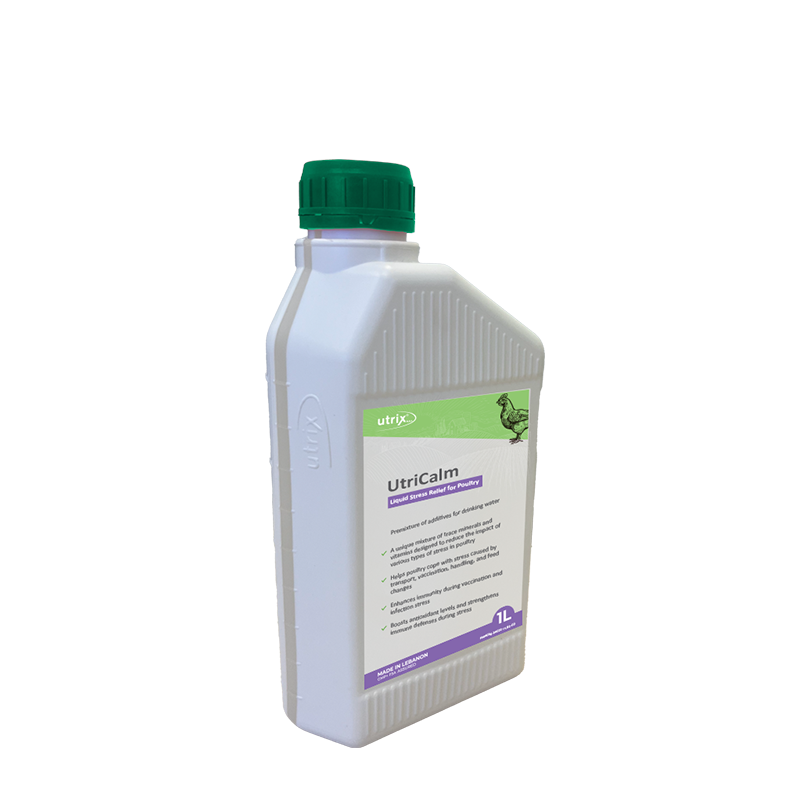
UtriCalm®
All-season stress relief, all-year comfort
Poultry are frequently exposed to environmental and management stressors that can negatively affect feed intake, growth, immunity, and overall performance. Effective stress management is essential to maintain bird wellbeing and production efficiency. Supportive anti-stress solutions help regulate oxidative stress, support immune function, and enhance resilience, contributing to improved flock performance, welfare, and profitability.



The Challenge
How does UTRIX support flocks under stress conditions?



Key Benefits
UtriCalm® Impact
Common Questions
Frequently Asked Questions
Stress negatively affects feed intake, growth and productivity, immune function, and behavior and wellbeing, resulting in increased mortality and economic losses.
Stress activates the hypothalamic-pituitary-adrenal (HPA) axis, increasing the release of corticosterone, a hormone that suppresses immune function. As a result, birds become more vulnerable to infections, disease challenges, and reduced overall performance.
Stress reduces blood flow to the digestive tract, which can damage intestinal cells and compromise gut integrity. This disruption impairs nutrient digestion and absorption, increases intestinal permeability, and can negatively affect overall health and performance.
Stress risk is highest during vaccination programs, transport or handling, feed transitions, in high-density production systems, and during environmental challenges such as heat or poor ventilation.
UtriCalm® reduces oxidative stress, regulates stress hormones, supports immune response, and improves metabolic stability.
The main benefits include reduced stress and anxiety, improved feed intake, better growth and performance, enhanced immune function, and improved wellbeing.
UtriCalm® should be used during any stress-prone situation, including management challenges (high stocking density, transport, feed transitions, thinning) and physiological stress periods (vaccination, diseases). It is also recommended when birds show behavioral signs such as aggression or feather pecking, or when performance indicators decline, such as reduced feed intake or increased mortality.
You might also like