Feed Quality & Safety
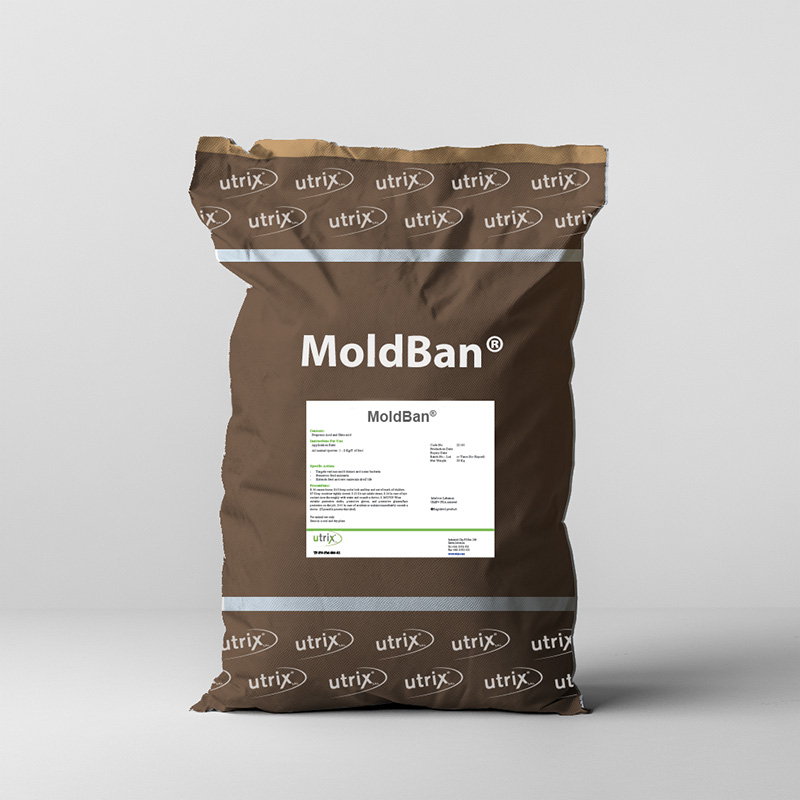
MoldBan®
Neutralize the conditions, not just the mold
If mold contamination in feedstuffs is a worldwide issue, it tends to be more pronounced in regions with warm and humid climates, such as the Middle East and Africa, since these conditions are ideal for mold growth, leading to higher contamination rates in feed. Studies have shown that a high percentage of animal feed in the region is contaminated with various molds, including Aspergillus and Fusarium species. Addressing mold contamination is crucial for ensuring the health and performance of livestock, ultimately enhancing the profitability of farming operations.
The Challenge
How does UTRIX prevent mold development in feed?

Key Benefits
What MoldBan® Delivers
Common Questions
Frequently Asked Questions
MoldBan® combines propionic and citric acids to inhibit mold and yeast growth. Propionic acid penetrates fungal cells and disrupts internal metabolism, while also exerting osmotic pressure externally, causing dehydration. Citric acid lowers and stabilizes pH, creating unfavorable conditions. Together, they act synergistically to control fungal contamination and extend feed shelf life.
Molds and mycotoxins are closely related but not the same. Molds grow in feed under favorable conditions and can produce mycotoxins as toxic secondary metabolites. While mold contamination increases the risk of mycotoxins, their presence is not always guaranteed. Importantly, mycotoxins are heat- and process-resistant, meaning they can remain even after molds are no longer visible. Controlling molds helps reduce risk, but mycotoxins require separate management strategies.
You might also like