Animal Products' Quality
UtriPhyll®
Reach your yolk color goals with ease

Egg yolk color can influence consumer perception and preference. As a result, egg producers are often required to meet specific yolk color expectations that vary across regions and consumer preferences. However, natural variations in feed ingredients can result in inconsistent pigmentation. Therefore, maintaining uniform and attractive yolk color is essential to meet market expectations and enhance the value of eggs.



The Challenge
How does UTRIX enhance egg yolk pigmentation?



Key Benefits
UtriPhyll® Impact
Common Questions
Frequently Asked Questions
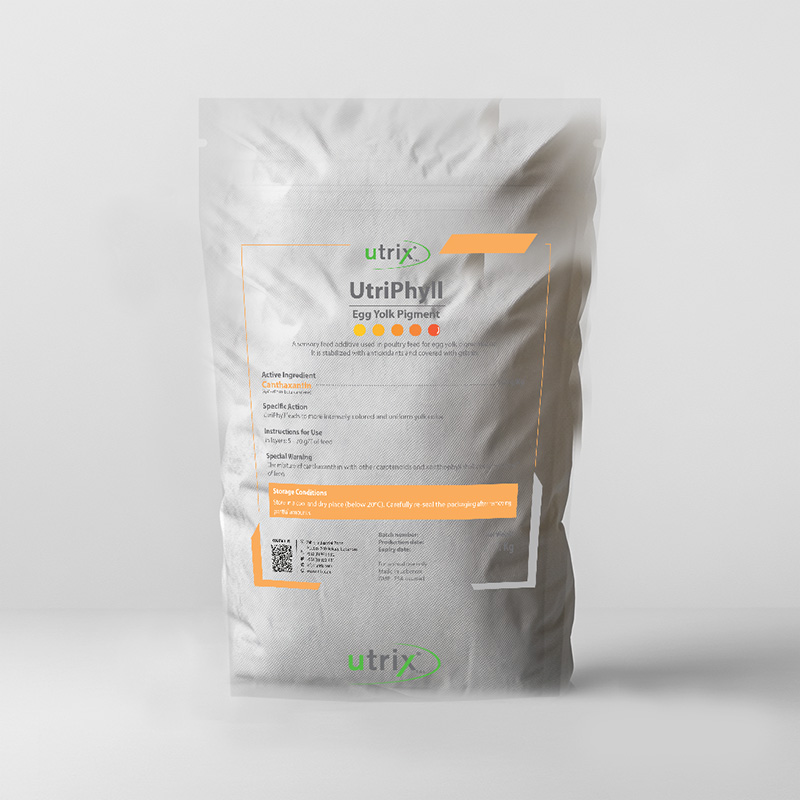
Canthaxanthin is absorbed through the digestive tract and deposited in the egg yolk, providing orange-red pigmentation. Since yolk color results from the combination of yellow and red pigments, adequate yellow pigment sources - such as the natural xanthophylls found in corn - are essential to achieve the desired yolk hue. UtriPhyll® helps fine-tune and intensify yolk color while complementing the yellow pigment contribution from the diet.
Yes. Use UtriPhyll® at the recommended inclusion level depending on corn level and desired yolk tone. Start lower and adjust gradually. For a stronger yellow, include high-xanthophyll raw materials.
Yes. UtriPhyll® can be used effectively when synthetic yellow pigments are unavailable. The final yolk color will depend on the balance between the yellow pigments naturally supplied by corn and the orange-red pigmentation provided by UtriPhyll®. Inclusion rates should be adjusted according to dietary corn levels and the desired yolk color target.
Initial changes may become noticeable within 7–10 days after adjusting the inclusion level. Full color expression is typically achieved after approximately 14 days of consistent feeding.
If yolk color remains below target, evaluate these factors as they can significantly affect pigment absorption and deposition: feed intake, fat quality and inclusion level, feed mixing uniformity, presence of mycotoxins, gut health status, and storage conditions of feed.
Consistent yolk color requires stable pigment inclusion, good feed manufacturing practices, uniform feed mixing, consistent raw material quality, proper bird health and gut function, and regular monitoring of yolk color using a yolk fan or equivalent color scale.
You might also like